


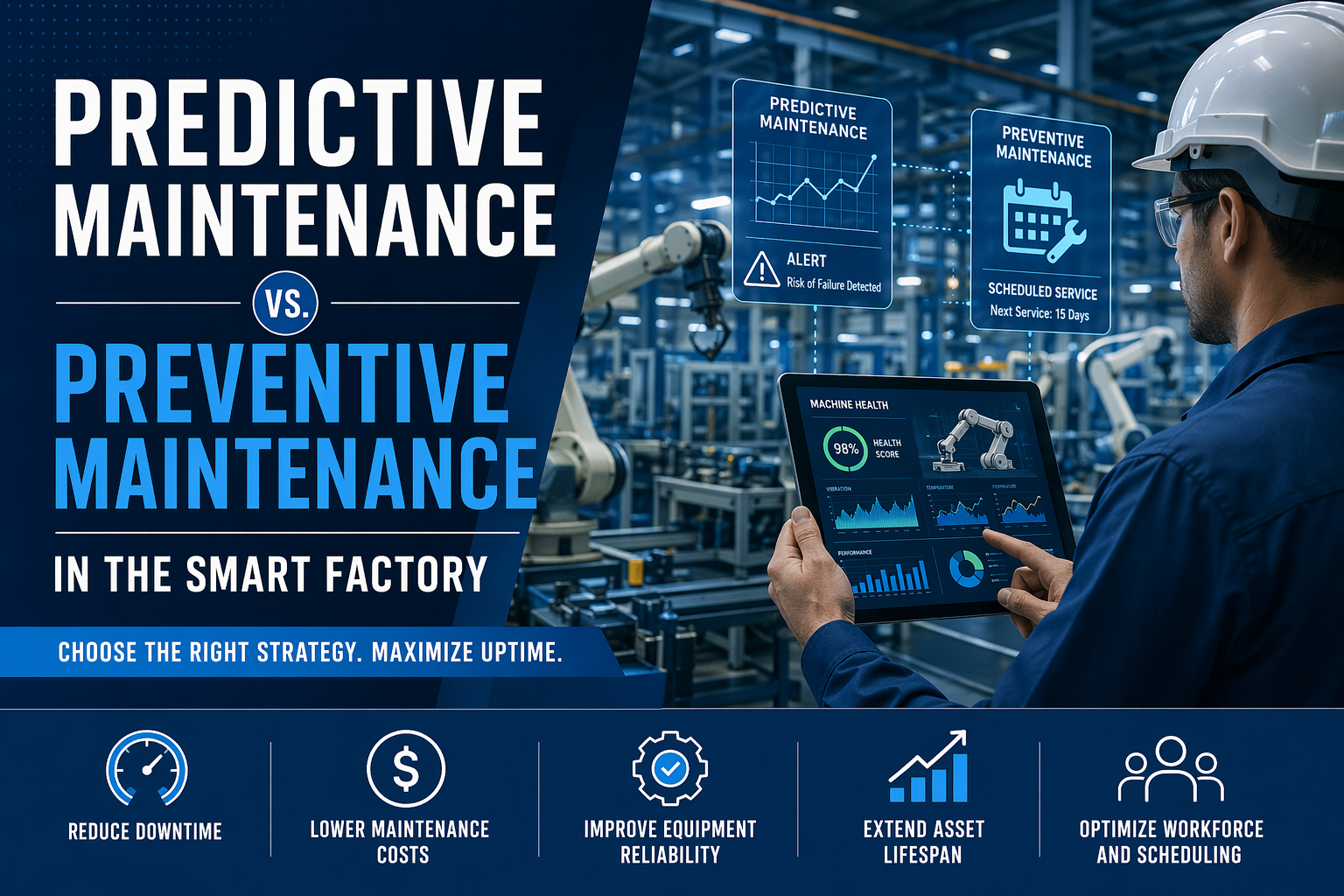
17 Apr Predictive Maintenance vs. Preventive Maintenance in the Smart Factory
Predictive Maintenance vs. Preventive Maintenance in the Smart Factory
Predictive maintenance vs. preventive maintenance in the smart factory is a critical decision point for manufacturers aiming to reduce downtime and control maintenance costs. Many businesses either over-maintain equipment or react too late to failures, leading to wasted resources and production disruptions.
This article explains the key differences between predictive maintenance vs. preventive maintenance in the smart factory and shows how to choose the right strategy for operational efficiency.
- Identify when to use predictive maintenance vs. preventive maintenance for maximum uptime
- Reduce maintenance costs by aligning strategy with actual equipment behavior
- Improve production reliability using ERP-integrated maintenance systems
- Minimize unplanned downtime with data-driven decision-making
- Optimize workforce and maintenance scheduling
Predictive Maintenance vs. Preventive Maintenance in the Smart Factory: What It Means
Predictive maintenance vs. preventive maintenance in the smart factory helps manufacturers choose the right approach to reduce downtime and improve equipment performance. Understanding these two strategies allows operations teams to align maintenance with production goals.
What is Predictive Maintenance in a Smart Factory
Predictive maintenance uses real-time data to detect equipment issues before failure occurs. Sensors, IoT devices, and ERP systems collect and analyze machine data such as vibration, temperature, and pressure.
This approach allows maintenance teams to act only when necessary. It reduces unnecessary servicing and extends equipment life. In a smart factory, connected systems enable continuous monitoring and proactive issue resolution.
What is Preventive Maintenance in a Smart Factory
Preventive maintenance follows a fixed schedule to service equipment at regular intervals. Maintenance teams perform inspections and replacements based on time or usage metrics.
This method reduces the risk of sudden breakdowns. In a smart factory, ERP systems automate scheduling and track service history, ensuring consistent execution.
Where Each Strategy Fits in Modern Manufacturing
Predictive maintenance vs. preventive maintenance in the smart factory fits different operational needs. Predictive maintenance supports critical assets, while preventive maintenance works for standard equipment.
Most manufacturers combine both strategies to balance efficiency and complexity.
Predictive Maintenance vs. Preventive Maintenance in the Smart Factory: Why It Matters
Predictive maintenance vs. preventive maintenance in the smart factory directly impacts production efficiency and cost control. Choosing the wrong strategy leads to downtime or wasted effort.
Why Maintenance Strategy Impacts Production Uptime
A strong maintenance strategy ensures continuous operations. Predictive maintenance minimizes unexpected failures, while preventive maintenance reduces risk through routine servicing.
Why Smart Factories Demand Data-Driven Maintenance
Smart factories rely on real-time data. Predictive maintenance uses analytics to drive decisions, while preventive maintenance provides a stable foundation when combined with ERP tools.
Why Traditional Approaches Fall Short
Traditional methods lack visibility into equipment health. ERP platforms provide the data and automation required to maintain consistent performance.
Predictive Maintenance vs. Preventive Maintenance in the Smart Factory: Key Differences
Predictive maintenance vs. preventive maintenance in the smart factory differs in technology, cost, and operational impact.
Data Usage and Technology Requirements
Predictive maintenance requires IoT sensors and analytics integrated with ERP systems. Preventive maintenance relies on schedules and historical data.
Cost Structure and ROI Comparison
Predictive maintenance involves higher upfront costs but delivers long-term savings. Preventive maintenance is easier to implement but may increase long-term expenses.
Risk Reduction and Equipment Lifespan
Predictive maintenance reduces failure risk and extends asset life. Preventive maintenance ensures consistency but may miss hidden issues.
Predictive Maintenance vs. Preventive Maintenance in the Smart Factory: When to Use Each
Predictive maintenance vs. preventive maintenance in the smart factory becomes effective when applied in the right scenarios.
When Preventive Maintenance Works Best
Preventive maintenance suits stable equipment with predictable wear patterns. It is easy to implement using ERP systems.
When Predictive Maintenance Delivers More Value
Predictive maintenance benefits critical equipment where downtime is costly. It provides real-time insights and prevents failures.
Hybrid Approach in Smart Factories
Most manufacturers use a hybrid approach. They combine predictive and preventive strategies to maximize efficiency and flexibility.
Predictive Maintenance vs. Preventive Maintenance in the Smart Factory: How ERP Enables Both
Predictive maintenance vs. preventive maintenance in the smart factory becomes more effective with ERP systems that centralize and automate maintenance operations.
Role of ERP in Maintenance Planning and Scheduling
ERP systems automate preventive schedules and track service history. They also support predictive maintenance by generating data-driven work orders.
Integration with IoT and Real-Time Data
ERP integrates with IoT devices to provide real-time visibility into equipment performance, enabling faster decisions.
Automating Maintenance Workflows
ERP systems automate task assignment, tracking, and reporting. This improves efficiency and reduces manual errors.
Predictive Maintenance vs. Preventive Maintenance in the Smart Factory: Who Should Decide
Predictive maintenance vs. preventive maintenance in the smart factory requires collaboration across teams.
Role of Operations and Maintenance Teams
These teams provide insight into equipment behavior and maintenance needs.
Role of IT and Data Teams
IT teams manage system integration and analytics required for predictive maintenance.
Aligning Strategy with Business Goals
Leadership must align maintenance strategy with cost, risk, and production goals.
Take the Next Step Toward Smarter Maintenance
Choosing between predictive maintenance vs. preventive maintenance in the smart factory directly impacts operational efficiency, cost control, and equipment performance. The right strategy reduces downtime, improves reliability, and supports long-term growth.
Scaled Solutions Group is here to guide you every step of the way.
Call (866) 957-8419
Email info@scaledsolutionsgroup.com
Visit www.Get-Scaled.com