


17 Apr A Guide to Managing Subcontracted Operations within Epicor Kinetic
Managing Subcontracted Operations in Epicor Kinetic
Managing subcontracted operations in Epicor Kinetic improves production control by embedding outsourced processes directly into structured workflows. Many manufacturers struggle with limited visibility, disconnected vendor communication, and inaccurate cost tracking when outsourcing operations. These challenges often lead to delays, rework, and reduced profitability.
This guide explains how Epicor Kinetic enables manufacturers to manage subcontracted operations within a unified ERP system, ensuring visibility, control, and accuracy across every outsourced step.
- Gain real-time visibility into subcontracted job status
- Improve cost accuracy and vendor accountability
- Streamline communication between internal teams and vendors
- Reduce production delays caused by external dependencies
- Maintain full control over outsourced manufacturing processes
How Epicor Kinetic Improves Production Control for Subcontracted Operations
Epicor Kinetic improves production control by embedding outsourced steps directly into job workflows. This allows manufacturers to maintain full oversight while still leveraging external vendor capabilities.
What Are Subcontracted Operations in Manufacturing
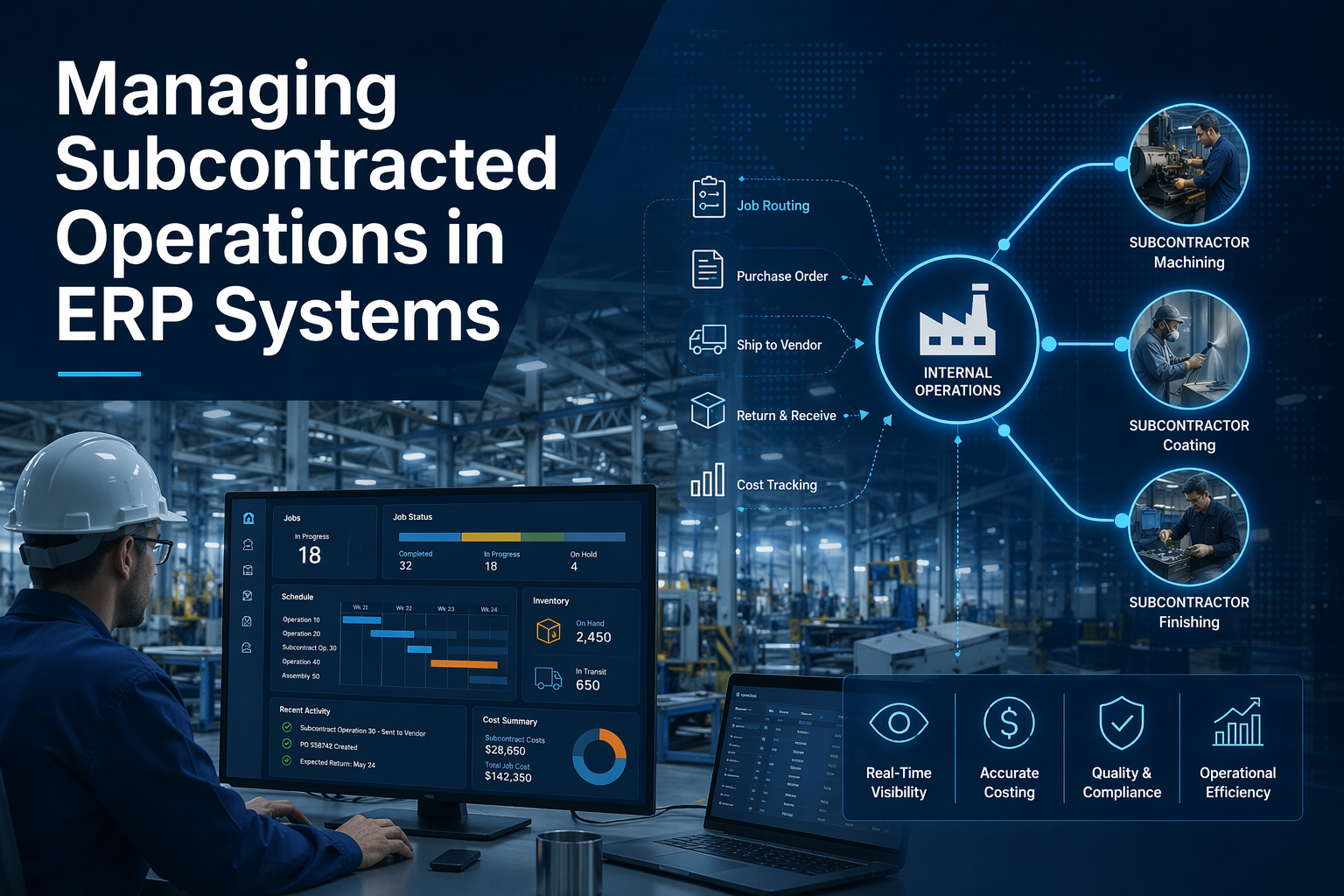
Subcontracted operations in Epicor Kinetic represent outsourced production steps managed within the ERP system. These steps occur when materials or partially completed goods are sent to external vendors for processes such as coating, machining, or finishing.
By integrating these operations into the Bill of Operations, Epicor Kinetic ensures outsourced work is tracked alongside internal production, eliminating visibility gaps.
How Subcontracting Is Managed Within Epicor Kinetic Jobs
Epicor Kinetic links subcontracted operations directly to job and purchasing functions. When a subcontract step is created, the system automatically generates a purchase order tied to the job.
This enables teams to monitor material movement, vendor progress, and expected return dates in real time.
Enhancing Vendor Coordination Through Epicor Kinetic
Epicor Kinetic improves vendor coordination by aligning internal teams and external suppliers in a single system.
Roles in Subcontracting Workflows
Each department plays a defined role in subcontracted workflows. Engineering sets specifications, production schedules operations, procurement manages vendors, and external partners execute the work.
This structure ensures consistency and reduces communication errors.
How Epicor Kinetic Connects Vendors and Internal Teams
Epicor Kinetic streamlines communication through integrated purchase orders and job tracking. Vendors receive clear specifications, quantities, and timelines, reducing miscommunication and delays.
Real-Time Visibility Into Subcontracted Operations
Epicor Kinetic provides real-time visibility into outsourced processes across the supply chain.
Common Visibility Gaps in Subcontracting
Subcontracting often creates blind spots when managed outside an ERP system. Spreadsheets and emails lead to outdated or incomplete information.
How Epicor Kinetic Centralizes Data
All subcontracting data is centralized within Epicor Kinetic. Teams can track job progress, vendor performance, and delivery timelines in real time from one platform.
Optimizing Scheduling and Lead Times
Epicor Kinetic improves scheduling by aligning vendor timelines with production plans.
Impact of Subcontracting on Production
Delays in subcontracted work can disrupt overall production schedules. Without proper planning, these delays can affect customer delivery commitments.
How Epicor Kinetic Manages Lead Times
Lead times are integrated into MRP and production scheduling. This ensures materials are sent and received at the correct time to maintain workflow continuity.
Improving Cost Tracking and Accuracy
Epicor Kinetic enhances cost visibility by capturing all subcontracting expenses within the job structure.
Challenges in Subcontract Cost Management
Variable costs such as labor, materials, and logistics make subcontracting difficult to control. Without accurate tracking, profitability can be impacted.
How Epicor Kinetic Tracks Costs
Costs are directly linked to jobs and purchase orders. This ensures accurate reporting and better cost control across operations.
Strengthening Quality Control and Compliance
Epicor Kinetic enforces quality standards across subcontracted operations.
How Quality Issues Occur
Quality issues often arise from inconsistent vendor processes or unclear requirements. This can lead to rework and production delays.
How Epicor Kinetic Ensures Quality
Inspection and compliance steps are integrated into workflows. This ensures outsourced work meets defined standards before reintegration into production.
Driving End-to-End Operational Efficiency
Epicor Kinetic connects internal and outsourced processes for improved efficiency.
Reducing Errors Through Integration
Automation reduces manual data entry and improves consistency. This minimizes errors and accelerates execution.
Scaling Operations with Subcontracting
Controlled subcontracting enables businesses to scale capacity without increasing internal resources.
Conclusion
Managing subcontracted operations in Epicor Kinetic gives manufacturers the visibility, control, and efficiency needed to manage outsourced production effectively. By integrating vendors, aligning schedules, and tracking costs in real time, organizations can reduce delays and improve overall performance.
Get Expert Help
Scaled Solutions Group is here to guide you every step of the way.
- 📞 Call: (866) 957-8419
- 📧 Email: info@scaledsolutionsgroup.com
- 🌐 Website: www.Get-Scaled.com