


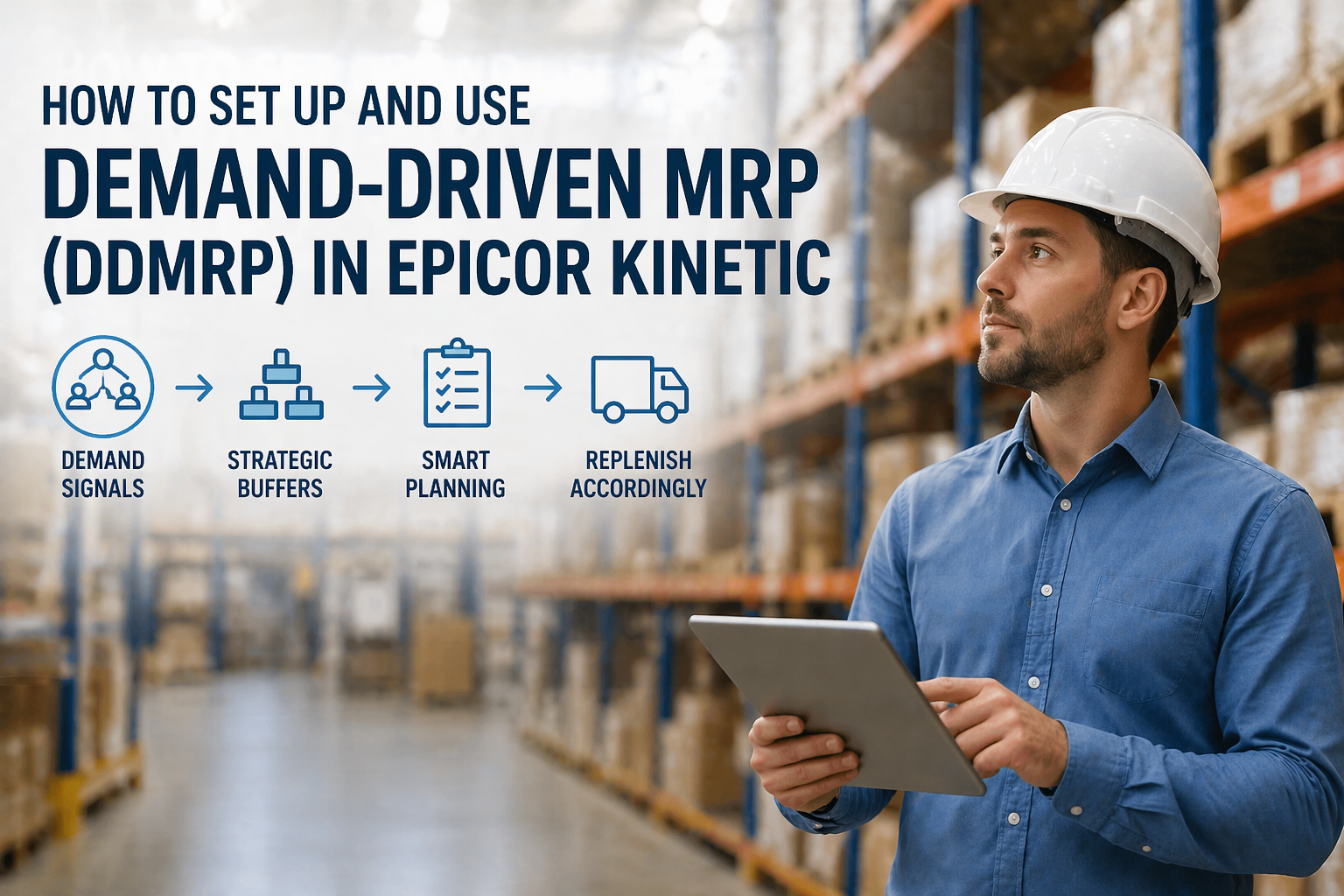
24 Apr How to Set Up and Use Demand-Driven MRP (DDMRP) in Epicor Kinetic
How to Set Up and Use Demand-Driven MRP (DDMRP) in Epicor Kinetic
Traditional planning systems often create constant inventory problems. Many manufacturers still rely on forecast-driven MRP, but forecasts quickly become unreliable when demand changes. The result is excess stock in some items, shortages in others, and planners spending more time reacting than improving operations.
Epicor Kinetic offers a smarter alternative through Demand-Driven MRP (DDMRP). Instead of depending on forecasts, DDMRP uses real demand signals and strategically placed inventory buffers to keep materials flowing smoothly. This creates a more responsive and stable supply chain.
- Reduce stockouts without increasing inventory
- Improve planning accuracy using real demand
- Stabilize purchasing and production schedules
- Increase visibility into inventory health
- Reduce manual overrides and planner stress
What Is Demand-Driven MRP and Why It Matters
Demand-Driven MRP is a modern inventory planning methodology that combines MRP logic with lean replenishment principles. It positions inventory buffers at strategic points in the supply chain and replenishes stock based on actual consumption.
How It Works Inside Epicor Kinetic
Epicor Kinetic uses inventory buffers to trigger replenishment when stock falls below target levels. These buffers act as control points, helping businesses respond quickly to changing demand while protecting operations from disruption.
Why Traditional MRP Often Fails
Forecast-driven systems struggle in volatile markets. Small forecast errors can create large shortages or overstock situations. As planners override system recommendations, trust in the ERP declines and planning becomes reactive.
How DDMRP Improves Flow
DDMRP separates supply chain stages using decoupling points. This prevents delays or variability in one area from impacting the entire operation, resulting in smoother production flow and better service levels.
Who Should Use DDMRP in Epicor Kinetic
DDMRP is ideal for businesses dealing with fluctuating demand, long lead times, or frequent inventory imbalances.
Best Fit Industries
Manufacturers, distributors, and mixed-mode operations benefit the most. Companies in discrete manufacturing, assembly, make-to-stock, or engineer-to-order environments often see strong results.
When to Move Beyond Traditional MRP
If your team constantly adjusts purchase orders, expedites jobs, or manages recurring stockouts, your current planning model may no longer be effective.
Common Warning Signs
- Frequent shortages of critical items
- High inventory carrying costs
- Unstable production schedules
- Late customer shipments
- Too many manual planner changes
Where to Position Inventory Buffers for Maximum Impact
Strategic buffer placement is one of the most important parts of DDMRP success.
Use Decoupling Points
Decoupling points separate one stage of supply from another. These locations absorb variability and stop disruptions from spreading across the supply chain.
Focus on High-Risk Items
Buffers often deliver the most value on long lead-time materials, high-usage components, bottleneck items, and products with unpredictable demand.
Use Epicor Data for Smarter Placement
Epicor Kinetic provides demand history, lead-time data, and inventory analytics to help determine where buffers should be positioned.
How to Set Up Strategic Buffers
Buffers are divided into zones that guide replenishment priorities.
Red, Yellow, and Green Zones
- Red Zone: Safety stock that protects supply
- Yellow Zone: Normal operating range
- Green Zone: Replenishment quantity trigger
Create Buffer Profiles
Items should be grouped based on lead time, demand variability, and criticality. Epicor Kinetic can then apply profile rules consistently across similar materials.
Right-Size Buffers
Buffer sizes should reflect actual usage patterns, replenishment times, and business priorities. Oversized buffers waste cash, while undersized buffers create shortages.
How to Configure Epicor Kinetic for Demand-Driven Planning
Maintain Accurate Parameters
Lead times, supplier performance, lot sizes, reorder rules, and item classifications must be accurate. Poor master data leads to poor planning outputs.
Align Core ERP Modules
Inventory, purchasing, production, and warehouse processes must all follow the same demand-driven logic to avoid conflicting signals.
Keep Data Clean
Regular audits of item records, BOMs, routings, and supplier data are essential for reliable replenishment decisions.
Executing Daily Replenishment Using Demand Signals
Once configured, Epicor Kinetic can automate replenishment based on real-time inventory status.
Demand Triggers Action
As materials are consumed, net flow positions change. When an item enters a reorder zone, the system generates purchase or production recommendations.
Monitor Buffer Status
Planners can review items by urgency, shortage risk, or replenishment priority, allowing faster decision-making.
Automate Purchasing and Production
Epicor can convert replenishment signals into purchase suggestions, transfer orders, or job releases, reducing manual effort.
Why Continuous Monitoring Is Essential
DDMRP is not a one-time setup. Ongoing review keeps the system aligned with real business conditions.
Adjust Buffers as Demand Changes
Seasonality, growth, supplier changes, and new products all affect required inventory levels. Buffers should evolve with the business.
Track Key KPIs
- Service level
- Inventory turns
- Stockout frequency
- Planner intervention rate
- Supplier performance
Avoid Common Mistakes
- Poor data quality
- Ignoring buffer reviews
- Applying the same rules to every item
- Lack of planner training
- Overriding the system too often
Conclusion
Demand-Driven MRP in Epicor Kinetic helps manufacturers move from reactive planning to controlled execution. By using strategic inventory buffers and real demand signals, companies can reduce shortages, lower excess inventory, and improve service performance.
Success depends on proper setup, accurate data, and continuous improvement. When implemented correctly, DDMRP becomes a powerful long-term strategy for operational excellence.
Scaled Solutions Group is here to guide you every step of the way.