


23 Mar Epicor 10 vs. Epicor Kinetic: Key Differences Manufacturers Must Know
Many manufacturers hesitate when comparing Epicor 10 vs Epicor Kinetic because ERP upgrades often disrupt operations, require retraining, and introduce short-term risk. Teams worry about downtime, user resistance, and whether the investment will truly deliver value.
At the same time, staying on an older system can create hidden inefficiencies that slow growth and increase long-term costs. This is where understanding the real differences between Epicor 10 and Epicor Kinetic becomes critical.
This article breaks down the key differences so you can evaluate whether upgrading to Kinetic aligns with your operational goals and future growth strategy.
- Understand the core differences between Epicor 10 and Kinetic
- Identify when an upgrade makes strategic sense
- Learn how cloud, UI, and flexibility impact productivity
- Make a data-driven ERP decision
Epicor 10 vs Epicor Kinetic: What Has Changed in the Platform
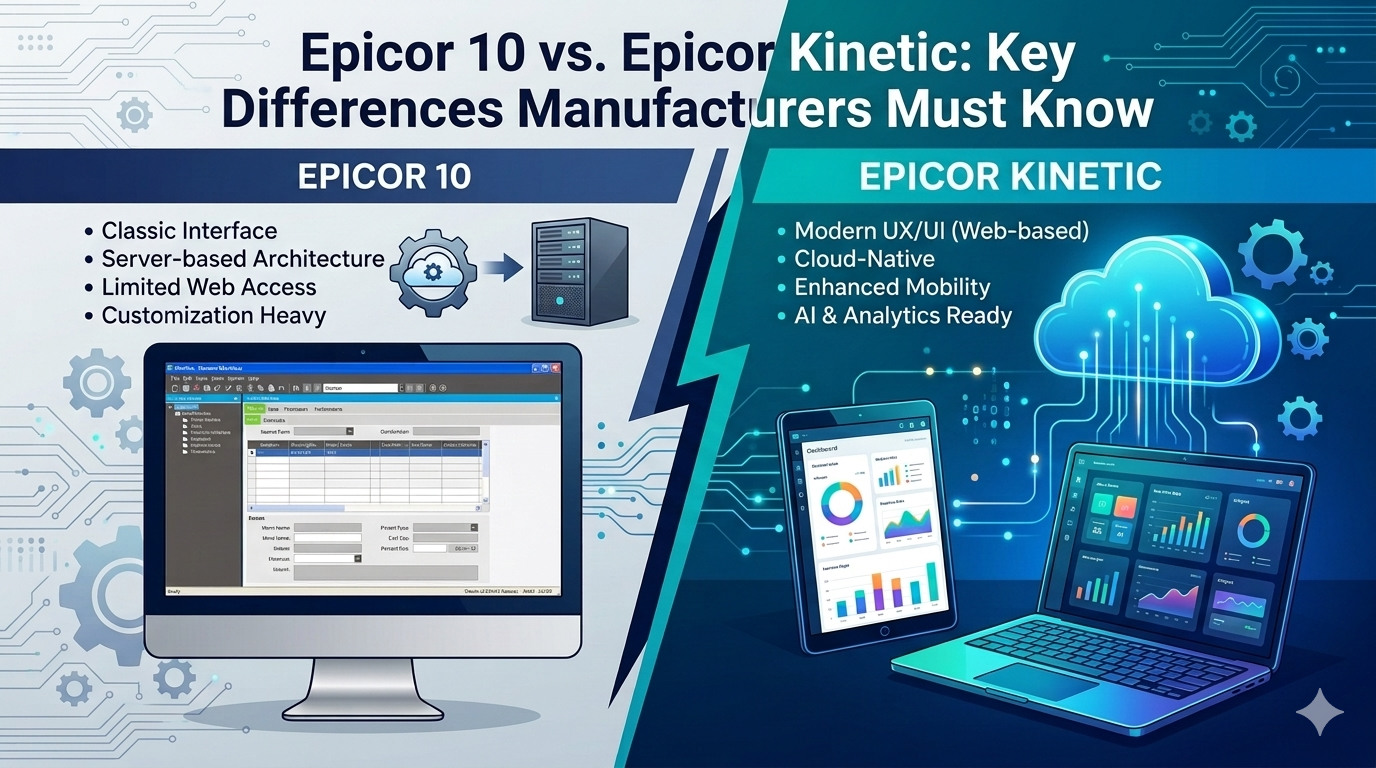
Epicor 10 vs Epicor Kinetic introduces a significant shift in platform architecture, designed to support modern manufacturing environments. Epicor 10 primarily operates on traditional on-premise infrastructure, while Kinetic is built with a cloud-first, future-ready architecture.
This architectural change directly impacts how manufacturers manage scalability, updates, and system performance.
With Epicor Kinetic, businesses gain:
- Scalability on demand to support growth without major infrastructure changes
- Automatic updates that reduce downtime and maintenance effort
- Improved system performance through modern frameworks
In contrast, Epicor 10 often requires manual upgrades, dedicated IT resources, and hardware investments. These factors increase operational overhead and limit flexibility.
For manufacturers planning expansion, multi-site operations, or digital transformation initiatives, the platform shift in Kinetic provides a strong foundation for long-term success.
Epicor Kinetic UI vs Epicor 10 Interface: Why User Experience Matters
Epicor Kinetic UI delivers a modern, browser-based interface that significantly improves user experience and productivity. Epicor 10, while functional, relies on a more traditional interface that can feel outdated and less intuitive.
User experience plays a critical role in ERP success. A system that is difficult to use often leads to low adoption, errors, and inefficiencies.
Kinetic’s UI offers:
- Responsive design that works across desktops, tablets, and mobile devices
- Simplified navigation that reduces time spent searching for information
- Role-based dashboards tailored to specific job functions
These improvements help employees complete tasks faster and with fewer mistakes. Training time is also reduced, which lowers onboarding costs for new users.
In fast-paced manufacturing environments, even small usability improvements can translate into measurable productivity gains.
Epicor Kinetic Cloud Capabilities vs Epicor 10 Deployment Options
Epicor Kinetic cloud capabilities provide manufacturers with greater flexibility and accessibility compared to Epicor 10’s traditional deployment model.
While Epicor 10 supports on-premise setups, Kinetic enables cloud, hybrid, and hosted deployment options. This flexibility allows businesses to choose a model that aligns with their IT strategy.
Cloud ERP offers several advantages:
- Remote access for teams working across locations
- Reduced IT infrastructure costs
- Automatic security updates and backups
- Improved disaster recovery
This is especially important for manufacturers managing multiple facilities or remote operations. Cloud access ensures that decision-makers always have real-time data, regardless of location.
As digital transformation accelerates, cloud capabilities are no longer optional—they are essential for staying competitive.
Epicor 10 vs Epicor Kinetic Customization and Flexibility
Epicor Kinetic customization tools provide greater flexibility through low-code and no-code capabilities, making it easier for teams to adapt the system to their needs.
Epicor 10 often requires deeper technical expertise for customization, which can slow down implementation and increase costs.
Kinetic simplifies this process by enabling:
- Low-code application development
- Workflow automation for repetitive tasks
- Faster deployment of changes
This flexibility allows manufacturers to respond quickly to changing business requirements, whether it’s updating workflows, modifying dashboards, or integrating new processes.
Reduced dependency on developers also lowers costs and empowers internal teams to take control of system improvements.
When Manufacturers Should Upgrade from Epicor 10 to Kinetic
Manufacturers should upgrade from Epicor 10 to Kinetic when existing system limitations begin to impact efficiency, scalability, or competitiveness.
Common indicators include:
- Outdated user interface affecting productivity
- Limited scalability as the business grows
- High maintenance costs for legacy infrastructure
- Lack of real-time visibility into operations
Timing is critical. Upgrading too late can result in lost opportunities, while upgrading too early without preparation can create unnecessary disruption.
A structured evaluation of business needs, system performance, and future goals helps determine the right moment to transition.
Epicor Kinetic vs Epicor 10 Cost and ROI Considerations
Epicor Kinetic vs Epicor 10 cost analysis shows that while Kinetic may require an upfront investment, it delivers strong long-term ROI.
Key cost-saving areas include:
- Reduced IT maintenance and infrastructure expenses
- Lower downtime due to automatic updates
- Improved efficiency through automation and better UX
Additionally, cloud-based systems reduce the need for hardware upgrades and ongoing support costs.
ROI should not be evaluated based on cost alone. Productivity improvements, faster decision-making, and scalability all contribute to long-term value.
Manufacturers that invest in modern ERP systems often gain a competitive advantage through better operational control and data-driven insights.
Move Toward a Modern ERP Strategy
Epicor Kinetic delivers modern capabilities that Epicor 10 cannot match. From cloud flexibility and improved user experience to enhanced customization and scalability, the benefits extend across the entire organization.
For manufacturers aiming to grow, improve efficiency, and stay competitive, upgrading to Kinetic is more than a technical decision—it is a strategic move.
The next step is to evaluate your current system and define a clear upgrade roadmap. Working with experienced ERP consultants can help ensure a smooth transition and maximize your return on investment.
Scaled Solutions Group is here to guide you every step of the way.
For more information, contact Scaled Solutions Group at (866) 957-8419
Email info@scaledsolutionsgroup.com or Visit www.Get-Scaled.com.